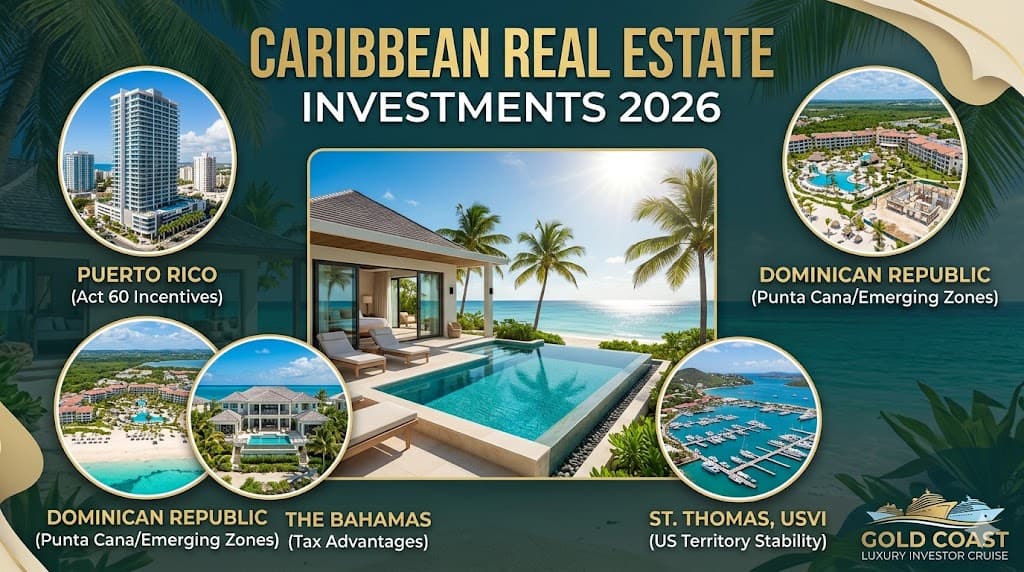
Discuss investing and there won’t be a discussion of Puerto Rico vs. the Dominican Republic-is that even possible? Comparing Puerto Rico vs. the Dominican Republic is not easy, and investors who look at it that way usually miss the subtle differences that really drive returns. Both markets are indeed attractive in 2026. But they are useful in very different ways and for very different types of investors.
Let this guide break down the key differences so you can understand which one is right for your strategy, risk tolerance, and time frame.
Taxation: Where Puerto Rico Is Unique
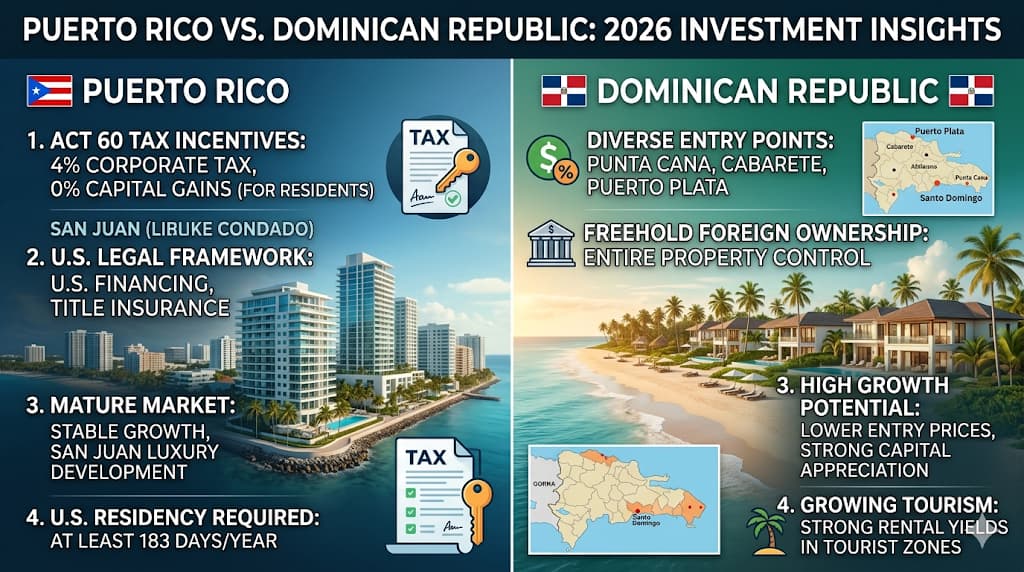
For U.S.-based investors, Puerto Rico has an advantage that is truly unbeatable. Act 60 (formerly Acts 20 and 22) provides a 4% corporate tax rate for eligible individuals, 0% tax on dividend and interest income, and 0% capital gains tax on capital gains earned after becoming a resident. These are not loopholes. These are incentives created by law, specifically designed to attract outside capital to the island. The condition, however, is that you actually have to establish yourself as a bona fide resident.
This means spending at least 183 days a year on the island, among other things. For investors willing to make this commitment, the tax savings can be so significant that they can meaningfully change the economics of an entire portfolio. The Dominican Republic offers nothing comparable in terms of taxes for U.S. investors. It has its own incentive programs, particularly focused on tourism development, but its key figures are not the same as those of Act 60.
Market Maturity And Entry Price
Puerto Rico is a more mature market. There has been significant luxury development in the last few years, especially in San Juan, and the entry price reflects that. You are paying for a market with established infrastructure, a U.S. legal framework, and a successful history. The potential for profit is more modest, but so are the risks.
The Dominican Republic offers a wide range of opportunities for entry. Punta Cana and Cap Cana are premium and already well-developed tourist markets. But areas like Puerto Plata represent an early stage in the development curve. Investment in infrastructure is active, international interest is growing, and pricing still reflects that the larger market is not yet fully ready. This combination usually results in significant price increases.
For long-term investors and those with a high risk appetite, the Dominican Republic offers more investment opportunities. For those seeking stability and tax savings, Puerto Rico is a strong option.
Property Law and Financing
There are significant differences between the two markets in terms of practical procedures.
Puerto Rico is a US territory. This means that US financing is available, US title insurance is available, and the legal system operates under US federal law. For American investors, this dramatically reduces the complexity and risk of the transaction.
The Dominican Republic allows foreigners to own freehold property, which is a positive. However, financing options for foreign buyers are more limited, local legal due diligence is essential, and the process requires working with an experienced local lawyer who knows the market. Neither market is impossible, but Puerto Rico is relatively easy for first-time American investors to do business in.
Rental Income and Tourism Demand
Both markets benefit from strong tourism demand, but the type of tourism is different.
Puerto Rico attracts a significant number of tourists from the mainland United States, many of whom are familiar with the island and return regularly. San Juan, in particular, has a healthy short-term rental market, and the island’s year-round appeal means that home occupancy rates are maintained well beyond peak seasons compared to other more remote destinations.
The Dominican Republic is one of the most visited countries in the Caribbean overall, and tourist numbers are also substantial. Premium areas around Punta Cana generate good rental income. Emerging markets like Puerto Plata are seeing an increase in tourist arrivals as infrastructure improves, creating an attractive opportunity for investors looking to take advantage of this momentum early.
Seeing Both Markets Firsthand Turns The Conversation Around
It’s one thing to read about a market. It’s another to walk through a development in Puerto Plata or sit down with an operator in San Juan. First-hand experience deepens your understanding of a market in a way that no amount of research done at home can replicate.
Hosted by Gold Coast Luxury, this 2026 cruise aboard Celebrity Beyond includes strategic port visits in both San Juan and Puerto Plata, as well as the LAC Investment Forum with operators and developers active in both markets. A hands-on experience of both sides of this comparison in a single voyage.